
Five Questions with Catherine Vasilopoulos, LCMHC
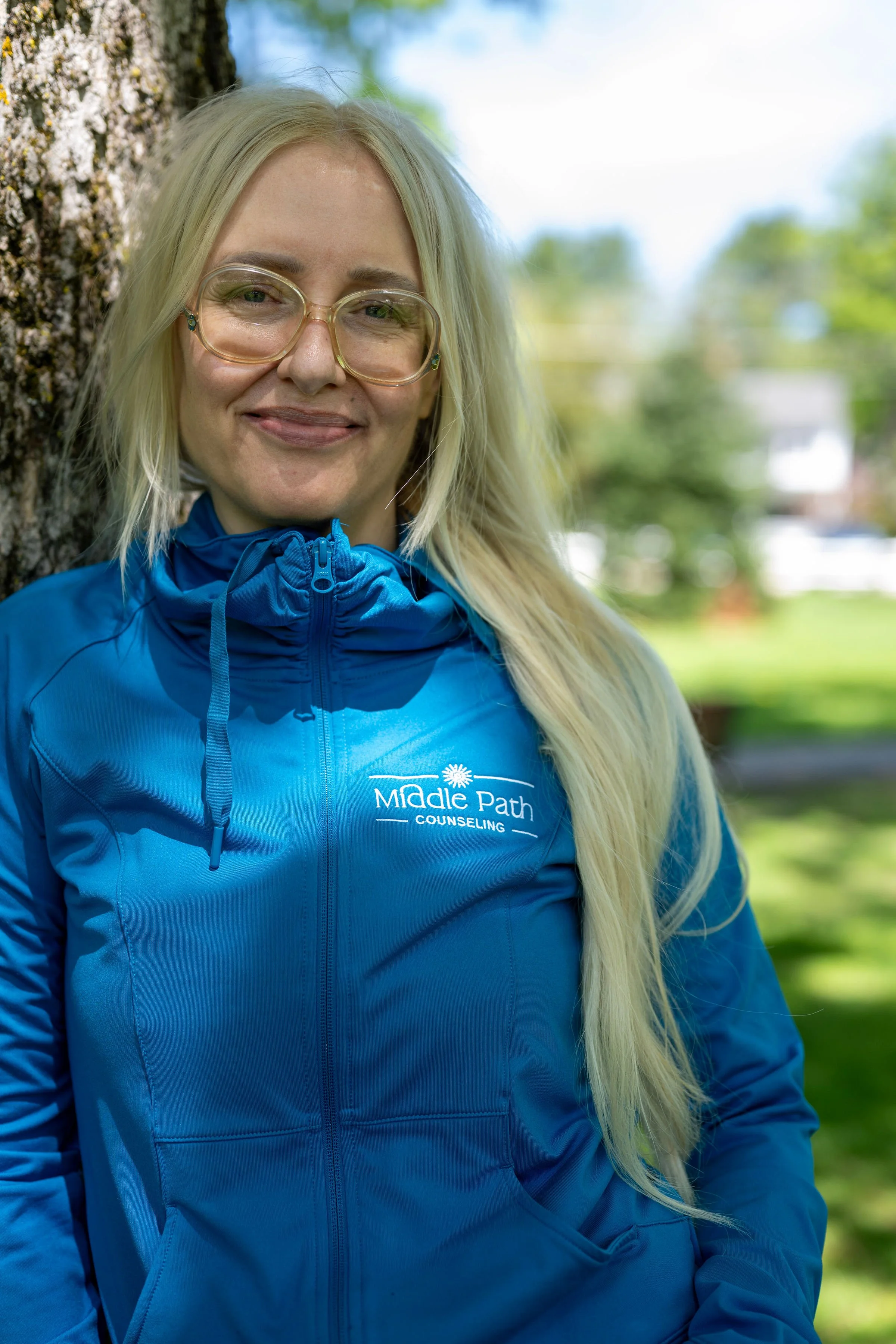
What drew you to becoming a therapist and what led you to specialize in the areas in the areas you work with today?
At a pretty young age I enjoyed reading texts lying around our home having to do with psychiatry, hypnotism and pioneering theory that paved the history of psychology, especially in the 60s and 70s. I took basic psychology courses in high school and college, and preferred them over most of my other classes. Then some time later I was pursuing different graduate programs in fields of psychology, and I came upon a picture on the front of a pamphlet (yes, made out of paper haha, before social media was a thing) for the University of North Dakota counseling program. The picture showed two chairs set in an empty room, a woman was shown sitting in one chair listening to someone else who was obscured in the picture, the woman had pad and pen in hand, was making deep yet kind eye contact, seemed interested in the hidden person, a positive and meaningful connection was being made in that picture, a non-judgmental witnessing, and something good was about to happen, something transformative. I was drawn to recreating this experience as a profession, and wanted to learn how. I entered the program and all subsequent history ensued from that point on!
As far as specializing goes, this is a work in progress for me. There are so many areas of counseling and therapy that offer specializations, to the point that I often don’t know what to choose to make my specialty. That being said, as I continue in my career I believe it is important to cultivate a specialty, and I’m getting closer to this. I’m currently drawn to and undergoing training in internal family systems, radically open dbt as well as bodily based stress management techniques such as emotional freedom technique.
How would you describe your therapeutic approach or style, and what can a new client expect from a session with you?
I have always been drawn to Rogerian, or person centered, therapy, which postulates that a client already has the answers within themselves and by providing non-judgmental inquisition, empathy, reflective listening and unconditional positive regard the answers can slowly be discovered by the client. That being said, over the years I have managed to nestle in a more directive approach due to my ongoing learning of so many solution focused evidenced based practices that offer fantastic guidance and outcomes. I can borrow from these practices while still preserving the Rogerian style that comes pretty natural to me. My existing clients also know me by now to have a pretty intact sense of humor, there can be some laughter for sure.
What’s something you wish more people understood about therapy or mental health?
There is nothing wrong with needing and asking for help. It is not a sign of weakness. In fact, the stigma that still exists about needing or wanting therapy is the same powerful influence behind the thinking that you should just pick yourself up by the bootstraps and quit being depressed, or that you shouldn’t cry or burden others, just keep it to yourself. This pressure only keeps us isolated which confounds the problem. Therapy, in my opinion, has much to do with the unlearning of this internalized stigma that can run deep, and then relearning how to take care of yourself in a way that does not reinforce the stigma. I too have a therapist, and I think it’s good for people to understand that even therapists aren’t exempt from this stigmatizing pressure.
Outside of your work, what do you enjoy doing, or what are you passionate about?
Lately I’ve been walking barefoot outdoors and meditating in the quiet. I love listening to the sounds of nature, it’s like music to me. I like to learn about holistic and naturopathic approaches to life, and believe in the benefits of raw food. I also think volunteering is a good idea and try to dedicate some time to this. Finally I’ve been known to watch reality crime shows for hours on end.
What’s a piece of advice or a mindset that’s stuck with you, professionally or personally, that you find yourself coming back to?
I really like what Gandhi said, be the change you wish to see in the world. If people start with this, then if the world doesn’t change, you still will have changed, and this can be powerful. Who do you want to be when life gets tough, how do you want to show up regardless of the outcome, because you have limited control of the outcome. Do what matters to you because it’s important to you. If the world does change for the better though, this is an invited plus but in my opinion not to be expected.